















⮞ Clause 4.1 – Provide accurate and accessible information to prospective and current students

⮞Introduction to Clause 5.1 of the Standards for RTOs 2015

⮞Your Ultimate Guide to Clause 5.2 in VET: Equipping Learners with Informed Decisions

⮞Your Ultimate Guide to Clause 5.3 in VET: Ensuring Transparency in Fee Information for Learners

⮞Your Ultimate Guide to Clause 7.3 in VET: Protecting Fee Payments for Learners

⮞Your Ultimate Guide to Clause 3.5 in VET: Streamlining Credit Transfer for Learners

Clause 4.1—Provide accurate and accessible information to prospective and current students

Introduction to Clause 4.1 of the Standards for RTOs 2015

Clause 4.1 under the Standards for RTOs 2015 is foundational, ensuring that RTOs provide clear, accurate, and accessible information to both prospective and current students. This clause is vital in maintaining the credibility and integrity of the Vocational Education and Training (VET) sector. It mandates RTOs to accurately represent their training services, qualifications, and the outcomes of their training programs, playing a key role in upholding the trust and confidence of students and other stakeholders.

Key Requirements of Clause 4.1 Standards for RTOs 2015

The essentials of Clause 4.1 include:

Accurate Representation of Services

Ensure all information accurately reflects the services and training products offered.

Inclusion of RTO Code

Marketing materials must prominently display the RTO’s code.

Consent for References

Obtain consent before referring to another person or organisation in marketing materials.

Nationally Recognised Training (NRT) Logo

Use the NRT logo strictly in accordance with the specified conditions.

Clarity on Third-Party Recruitment

Clearly disclose when a third party is recruiting on behalf of the RTO.

Distinction in Training Delivery

Distinguish clearly in marketing materials between training delivered directly by the RTO, on behalf of another RTO, or through a third party.

Distinguishing Non-AQF Training

Clearly differentiate training leading to AQF certification from other forms of training or assessment.

Use of Training Product Titles and Codes

Include the official titles and codes of training products as listed on the national register.

Advertising of Non-Current Training Products

Only market non-current training products while they are still within the RTO’s scope.

Claims about Licensed or Regulated Outcomes

Only claim a training product leads to a licensed outcome if confirmed by the relevant regulator.

Details on Financial Support

Provide clear information about any available VET FEE-HELP, government-funded subsidies, or other financial support.

No Guarantee of Completion or Employment Outcomes

Avoid guarantees that a learner will successfully complete a training product or achieve a specific employment outcome.

Navigating RTO Marketing Compliance with Clause 4.1

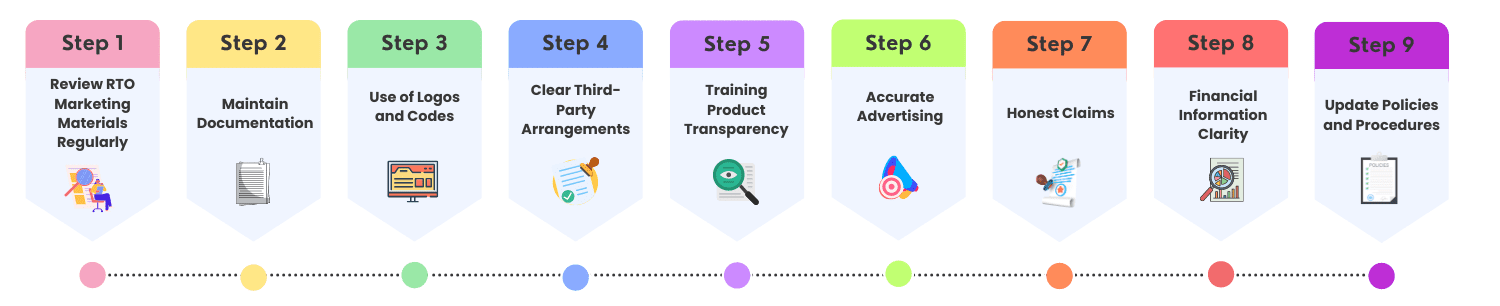
Navigating compliance with Clause 4.1 involves adopting a series of practices aimed at ensuring the accurate and transparent presentation of training services. Here’s how RTOs can stay compliant, illustrated with icons for clarity:
  • Review RTO Marketing Materials Regularly: Regularly check all promotional content to ensure it accurately reflects the latest training products, services, and outcomes.
  • Maintain Documentation: Keep thorough records of consent from individuals or organisations mentioned in your marketing materials.
  • Use of Logos and Codes: Appropriately use the Nationally Recognised Training (NRT) logo and prominently display the RTO code in all marketing materials, following the official guidelines.
  • Clear Third-Party Arrangements: Clearly outline any agreements involving third-party recruitment in your marketing materials and contracts.
  • Training Product Transparency: Explicitly distinguish between nationally recognised training leading to AQF certification and other training forms.
  • Accurate Advertising: Ensure the titles and codes of training products are consistent with those listed on the national register and that only currently available training products are promoted.
  • Honest Claims: Make only truthful claims about the outcomes of training products, especially concerning employment prospects and licensing requirements.
  • Financial Information Clarity: Provide transparent information regarding any financial support options available to students, including scholarships, subsidies, or loan schemes.
  • Update Policies and Procedures: Develop clear, documented policies for marketing and information dissemination. Regularly review these policies to ensure ongoing compliance.

Case Study: Overcoming Non-Compliance to Achieve Best Practices for Clause 4.1

  • Background: Located in Melbourne, XYZ Training Institute, a medium-sized Registered Training Organisation (RTO), encountered a significant setback when a compliance audit revealed non-compliance under Clause 4.1 RTO Standards 2015. The audit identified that course information across marketing platforms was inconsistent, with several unit names and codes incorrectly listed. Additionally, there were issues with the outdated marketing materials and misleading representations about employment outcomes, highlighting a clear need for a strategic overhaul of XYZ’s marketing practices to align with regulatory standards.
  • Challenges Identified:
    • Inconsistent course information across different marketing channels.
    • Incorrect unit names and codes in promotional materials.
    • Outdated marketing content leading to potential student misguidance.
    • Misleading claims about employment outcomes in marketing materials.
  • Strategic Solutions Implemented:
  • Comprehensive Marketing Audit:
    • Undertook a thorough review of all marketing materials, including digital platforms and printed brochures, to identify discrepancies and outdated information.
  • Centralised Documentation System:
    • Established a centralized record-keeping system to maintain updated and accurate course information, including records of consent from featured individuals or organizations.
  • Implementation of Branding and Compliance Guidelines:
    • Developed and disseminated clear branding and RTO marketing compliance guidelines focusing on the accurate use of unit names, codes, and the Nationally Recognised Training (NRT) logo, including the mandatory inclusion of the RTO code.
  • Transparent Third-Party Collaborations:
    • Revised agreements with third-party recruiters to ensure clarity and transparency in their roles and the services they provide, reflecting true and accurate information in all marketing efforts.
  • Dynamic Training Product Updates:
    • Implemented a dynamic process for updating training product information in real-time across all marketing channels, ensuring consistency and accuracy.
  • Honest and Realistic Outcome Representations:
    • Overhauled marketing materials to remove any unsubstantiated claims about employment outcomes, focusing instead on the skills and competencies gained through the training provided.
  • Clear Financial Support Communication:
    • Enhanced the presentation of information regarding financial support options, making it easily accessible and understandable for prospective students.
  • Outcomes: Following the implementation of these strategic solutions, XYZ Training Institute not only rectified the non-compliance issues identified in the audit but also significantly improved its engagement with prospective students. The institute witnessed an increase in enrollments attributed to the enhanced clarity, transparency, and accuracy of their marketing materials. This proactive approach not only restored the institute’s reputation but also set a new standard for marketing practices within the VET sector.
  • Conclusion: XYZ Training Institute’s journey from non-compliance to best practice exemplifies the importance of accurate, transparent marketing in the education sector. By addressing the audit findings head-on and implementing rigorous standards for marketing content, XYZ demonstrated that commitment to RTO compliance and transparency is key to building trust with students and achieving long-term success.
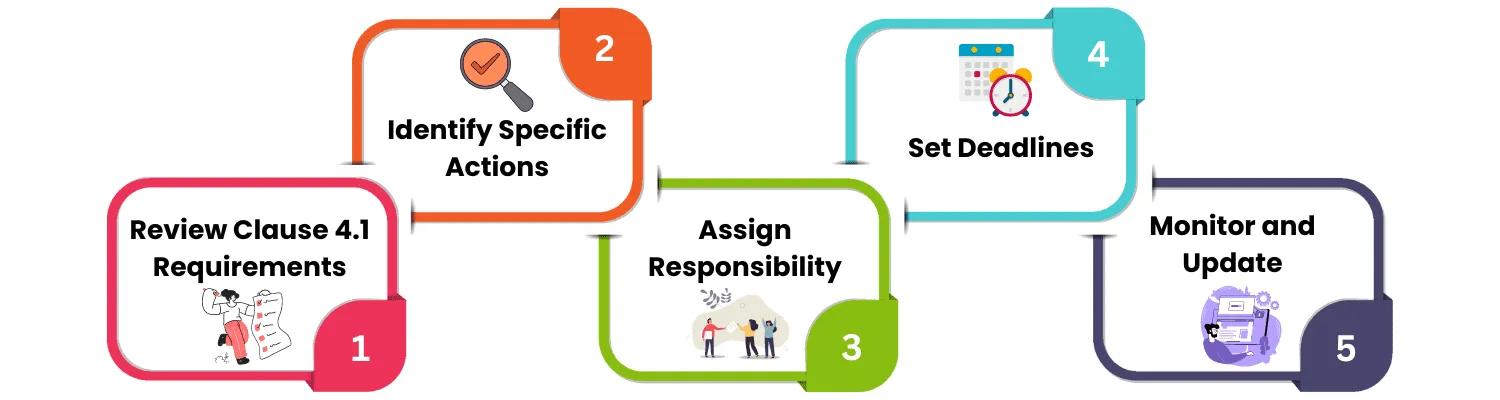
  • Interactive Activity: Clause 4.1 RTO Compliance Checklist Creation

    • Objective: Create compliance checklist based on Clause 4.1 requirements.
    • Steps:
      • Review Clause 4.1 Requirements: Revisit the key requirements of Clause 4.1 discussed earlier in the content.
      • Identify Specific Actions: Based on each requirement, identify specific actions your RTO can take to ensure compliance. For example, auditing current marketing materials for accuracy.
      • Assign Responsibility: For each action, assign a team member who will be responsible for its implementation and monitoring.
      • Set Deadlines: Establish realistic deadlines for when each action should be reviewed or completed.
      • Monitor and Update: Decide on a regular interval for reviewing the checklist’s effectiveness and updating it as necessary.
    • Conclusion
      • Encourage ongoing commitment to RTO marketing compliance and improvement

    Implementation Guide for the Activity:

    Common Questions During RTO Marketing Compliance Audits for Clause 4.1

    Accurate representation means all your marketing materials should truthfully and clearly describe the training products and services you offer, including course content, outcomes, and any prerequisites. This information should be current and align with what is delivered.
    The NRT logo should only be used in accordance with the prescribed guidelines, which include using it solely for nationally recognised training products for which your RTO has current scope of registration. Always refer to the latest guidelines on the use of the NRT logo.
    Your marketing materials must clearly state any third-party arrangements for training delivery or student recruitment. Include the roles of the RTO and the third party, ensuring students understand who will be delivering their training.
    No, you cannot guarantee employment outcomes. Marketing materials can mention the potential career paths and employment sectors the training prepares students for, but they cannot imply guaranteed employment.
    While the medium may differ, the compliance requirements under Clause 4.1 are the same. All marketing materials, whether online or printed, must provide accurate, accessible, and transparent information about the RTO’s services and training products.
    Marketing of non-current training products is only permissible while they remain on your RTO’s scope of registration. You must clearly indicate any transition arrangements to the new training products to avoid misleading prospective students.

    Clearly outline any available financial support options, including government-funded subsidies, VET FEE-HELP, or other financial assistance. Provide straightforward information on eligibility criteria and application processes.

    Prepare by reviewing all marketing materials for accuracy and compliance, ensuring they reflect current offerings and regulatory requirements. Maintain records of consent for references and documentation supporting claims made in marketing. Regularly train staff and review third-party agreements for compliance.

    Immediately correct any inaccuracies or misleading information. Update all affected materials and review your processes to prevent future non-compliance. Document the corrections made and the steps taken to rectify the issue.

    Request Your Free Sample, Product Info & Pricing Today

    By submitting this form, you agree to the VET Resources Privacy Policy.