


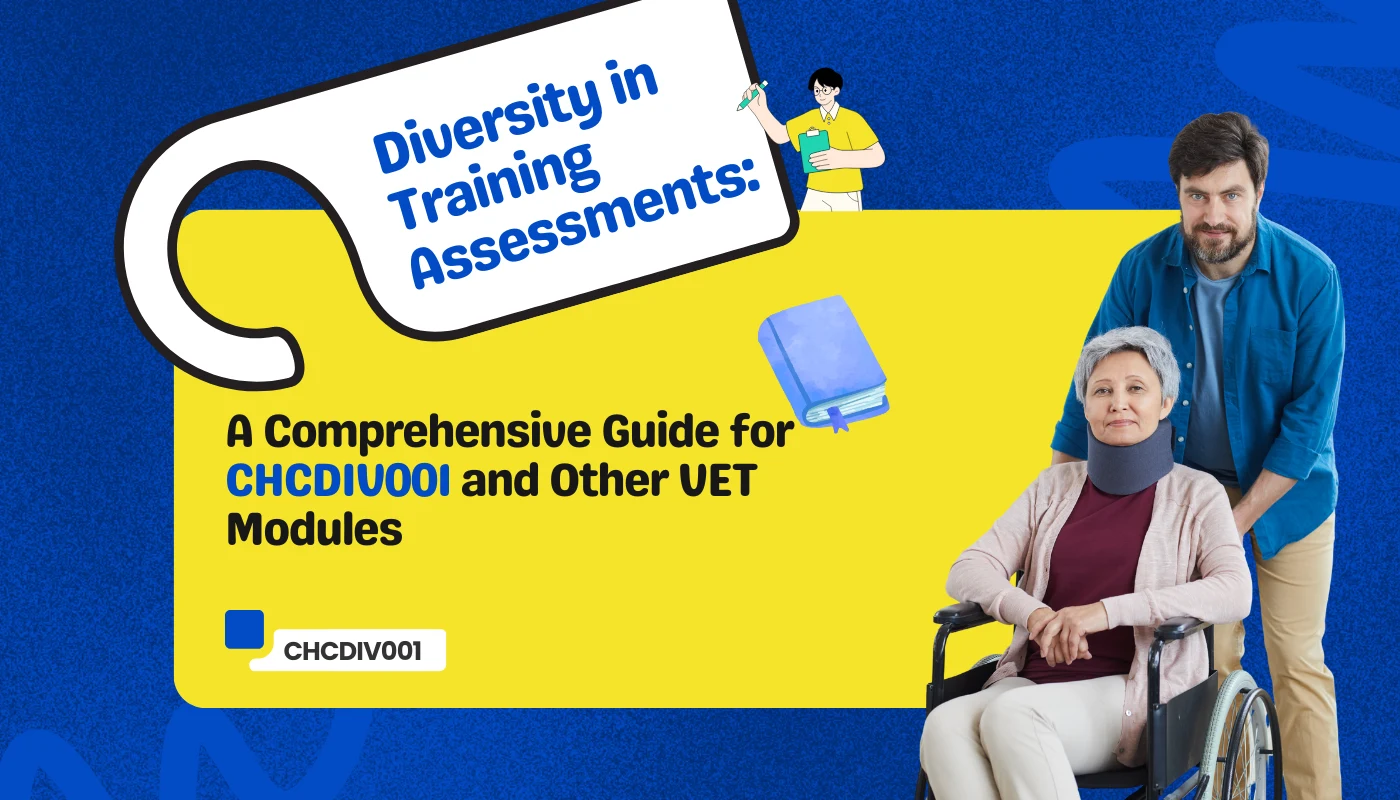
In Australia’s evolving vocational education and training (VET) sector, addressing diversity is no longer an option—it is a necessity. With over 4000 Registered Training Organisations (RTOs) across the country, diversity remains one of the most critical aspects of effective training and assessment. Units such as CHCDIV001 – Work with Diverse People provide a foundational framework to equip VET learners with the knowledge and skills required to understand and navigate diverse cultural and social contexts in the workplace.
For RTOs, integrating diversity into training assessments is also a core compliance requirement under the Australian Skills Quality Authority (ASQA). Beyond regulatory obligations, inclusive assessment practices help ensure fairness, reduce bias, and create learning environments that genuinely reflect Australia’s multicultural society. This article explores the importance of diversity in training assessments, provides practical guidance for embedding inclusive practices into the CHCDIV001 assessment process, and offers sample resources to support RTOs in meeting ASQA’s compliance expectations.
Did you know?
ASQA oversees more than 4000 RTOs across Australia, ensuring VET qualifications are delivered in line with diversity,
equity, and accessibility standards—particularly within assessment design and validation.
What is Diversity in Training Assessments?
Diversity in training assessments refers to the inclusion of all learners in a way that acknowledges and values their unique backgrounds. This can include, but is not limited to, cultural, racial, religious, gender, disability, and socio-economic diversity. For RTOs, addressing diversity in assessments is vital to ensure fairness and that all learners have equal opportunities to demonstrate their competency.
In the context of CHCDIV001 Work with Diverse People, diversity is not just a theoretical concept but a practical component. The unit is specifically designed to help learners understand cultural safety, competence, and inclusivity. For trainers, this means ensuring assessments reflect a range of learner needs, including those related to cultural backgrounds, disabilities, language barriers, and gender identities.
Why Diversity Matters in VET Assessments
Australia is home to one of the world’s most diverse populations. The inclusion of diverse groups in the workforce, including those from varied cultural, social, and economic backgrounds, necessitates that VET programs adapt to the varied learning needs of their students. Diversity in training assessments is about providing an equitable learning experience for every student, regardless of their background.
There are several key reasons why diversity in assessments is essential:

- Promoting Inclusivity: By addressing diversity in assessments, RTOs can ensure that learners from all backgrounds feel welcomed and supported. This promotes not only learning but also long-term participation in VET programs.
- Complying with ASQA Standards: ASQA mandates that assessments must be inclusive and accessible, ensuring that learners are evaluated on their actual competencies rather than being disadvantaged by their background.
- Enhancing Learner Outcomes: Studies have shown that diverse and inclusive learning environments lead to better engagement and performance. By adjusting assessments to meet the needs of all learners, RTOs can foster improved learning outcomes.
- Reflecting Australia’s Workforce: An inclusive approach to assessments mirrors the diversity in the Australian workforce, preparing students for real-world situations where they will encounter and work with people from different backgrounds.
How to Address Diversity in CHCDIV001 Assessments
Addressing diversity in assessments involves both proactive planning and adaptable assessment practices. Here are some strategies to ensure your assessments in CHCDIV001 are inclusive:
- Cultural Sensitivity in Assessment Design: It’s essential to ensure that assessments are free from cultural bias. This can be achieved by adapting language, scenarios, and examples that reflect the lived experiences of learners from various backgrounds. Use inclusive and neutral language that doesn’t assume a specific cultural perspective.
- Flexible Assessment Methods: Learners possess unique strengths and challenges. For example, some students might struggle with written assessments due to language barriers, while others may be more comfortable with practical demonstrations. To ensure inclusivity, incorporate various assessment methods such as oral presentations, group activities, written tasks, and practical projects.
- Reasonable Adjustments for Learners with Disabilities: For learners with physical or cognitive disabilities, assessors must make reasonable adjustments to allow them to complete assessments fairly. This may involve extended time, alternative formats (e.g., audio recordings or visual aids), or physical accommodations (e.g., accessible assessment rooms).
- Encouraging Self-Reflection: Encourage students to reflect on their cultural beliefs and how these might affect their interactions with others. This will not only foster personal growth but also improve understanding and empathy in the workplace.
- Bias Awareness and Unconscious Bias Training: Trainers and assessors should undergo regular training to identify and mitigate unconscious biases that may affect their judgment during the assessment process. This will help create an equitable environment where all students have an equal opportunity to succeed.
- Collaboration with Cultural Experts: RTOs can collaborate with cultural experts or use external resources to ensure assessments are culturally appropriate and sensitive. This could involve seeking feedback from cultural advisors or incorporating cultural competence training into the professional development programs for assessors.
Key Challenges Faced by RTOs in Ensuring Inclusive Assessments
While inclusive assessment practices are essential for compliance and learner equity, many RTOs face practical challenges in implementing them consistently and effectively.
Unconscious Bias
Assessors may unintentionally favour learners from similar cultural or educational backgrounds, leading to inequitable assessment
outcomes without deliberate moderation and awareness.
Lack of Resources
Limited access to multilingual support, inclusive learning materials, and assistive technologies can restrict an RTO’s ability to
deliver fair and accessible assessments.
Assessment Adjustments
Providing reasonable adjustments, such as extended time or alternative formats, while maintaining consistency and fairness, can be
operationally challenging.
Maintaining Assessment Integrity
RTOs must carefully balance accessibility with the requirement to ensure assessments remain valid, reliable, and accurately measure
learner competence.
Sample Resources for CHCDIV001 and Other VET Modules
For RTOs and trainers seeking to strengthen diversity and inclusivity within assessments, resources such as
Learning and Assessment Kits, Recognition of Prior Learning (RPL) Kits, LLND Kit, and
SCORM/eLearning Packages are invaluable. These resources are purpose-built to align with
ASQA standards while supporting inclusive assessment design.
At VET Resources, we provide a range of practical sample kits that RTOs can confidently integrate into their training and assessment strategies. These kits include adaptable assessment tools, sample case studies, and culturally sensitive learning materials designed for real-world VET delivery.
FAQs Section (VET-specific)
CHCDIV001 Work with Diverse People is a unit that focuses on cultural competence and understanding diverse social and cultural environments. It is essential for RTOs to teach learners how to work inclusively, which is why this unit is integral to many VET qualifications.
Diversity impacts VET assessments by requiring RTOs to ensure assessments are accessible and fair for all learners. This includes considering cultural, linguistic, and disability-related factors that could affect learners’ ability to demonstrate their competence.
Some strategies include using diverse assessment methods, offering reasonable adjustments for students with disabilities, and ensuring the assessment materials are culturally neutral and sensitive.
RTOs must maintain the validity and reliability of assessments while ensuring that reasonable adjustments are made to accommodate learners’ needs. This can be achieved by providing clear guidelines, training for assessors, and using diverse methods to measure competency.
Yes, VET Resources provides free samples to help assessors create inclusive and compliant assessments. You can download these resources and tailor them to your specific training needs.
Absolutely. All of our learning kits and assessment resources are designed to meet ASQA’s standards and address diversity in VET assessments.
To ensure your RTO stays ahead of ASQA compliance in the evolving VET sector,
Request your free resource sample today and ensure your assessment practices are up to date.
genuinely reflect the diversity of your learners.
Related Products
Learning and Assessment Kit – UEECD0002 – Analyse static and dynamic parameters of electrical equipment
Original price was: $2,000.00.$800.00Current price is: $800.00.Learning and Assessment Kit – UEECD0003 – Apply industry and community standards to engineering activities
Original price was: $2,000.00.$800.00Current price is: $800.00.Learning and Assessment Kit – UEECD0003 – Manage contract variations
Original price was: $2,000.00.$800.00Current price is: $800.00.Learning and Assessment Kit – UEECD0004 – Apply material science to solving electrotechnology engineering problems
Original price was: $2,000.00.$800.00Current price is: $800.00.