Hiring the right employees has become more challenging than ever before. In today’s competitive job market, businesses across industries struggle to find skilled professionals, reduce hiring time, and retain top talent. Whether you’re a startup, a growing business, or a large enterprise, recruitment challenges can slow down business growth and impact overall productivity.
The modern workforce has evolved significantly. Candidates now expect competitive salaries, career growth opportunities, flexible work arrangements, and a positive work culture. At the same time, employers are looking for professionals who not only possess the required technical skills but also align with the company’s values and long-term vision.
The good news is that most hiring challenges can be overcome with the right recruitment strategy. By understanding these obstacles and implementing effective solutions, businesses can improve hiring outcomes and build high-performing teams.
In this blog, we’ll explore the most common hiring challenges companies face and practical ways to overcome them.
Why Recruitment Has Become More Challenging
The recruitment landscape has changed dramatically over the last few years.
Several factors contribute to hiring difficulties, including:
- Increased competition for skilled talent
- Rapid technological advancements
- Changing employee expectations
- Remote and hybrid work models
- Industry-specific skill shortages
- High employee turnover
- Economic uncertainty
Companies that fail to adapt to these changes often struggle to attract and retain qualified professionals.
Challenge 1: Finding Qualified Candidates
One of the biggest recruitment challenges is finding candidates who possess the right combination of skills, experience, and attitude.
Many employers receive hundreds of applications but only a small percentage meet the job requirements.
Solution
Improve your sourcing strategy by:
- Posting jobs on multiple platforms
- Using LinkedIn for professional networking
- Encouraging employee referrals
- Partnering with staffing agencies
- Building a strong talent pipeline
Expanding recruitment channels increases the likelihood of finding high-quality candidates.
Challenge 2: Lengthy Hiring Process
A slow recruitment process often results in losing top candidates to competitors.
Highly skilled professionals usually receive multiple job offers and rarely wait several weeks for hiring decisions.
Solution
Speed up the recruitment process by:
- Creating standardized interview procedures
- Scheduling interviews promptly
- Reducing unnecessary approval levels
- Using Applicant Tracking Systems (ATS)
- Providing quick feedback after interviews
A faster hiring process improves the candidate experience and increases offer acceptance rates.
Challenge 3: Skills Gap
Technology is evolving rapidly, creating demand for specialized skills that many candidates may not yet possess.
Industries like IT, healthcare, engineering, finance, and digital marketing frequently experience talent shortages.
Solution
Instead of hiring only based on current skills:
- Focus on learning ability
- Hire candidates with growth potential
- Invest in employee training
- Offer certification programs
- Develop internal talent
Upskilling employees often proves more cost-effective than repeatedly hiring externally.
Challenge 4: High Competition for Top Talent
Every business wants experienced professionals.
As a result, qualified candidates often receive multiple offers from different employers.
Solution
Differentiate your company by offering:
- Competitive salaries
- Performance bonuses
- Flexible working options
- Career development opportunities
- Positive workplace culture
- Health and wellness benefits
Strong employer branding helps attract talented professionals.
Challenge 5: Poor Employer Branding
Candidates research companies before applying.
Negative reviews or limited online presence can discourage talented professionals from joining your organization.
Solution
Build a positive employer brand by:
- Showcasing company culture
- Sharing employee success stories
- Maintaining active social media profiles
- Highlighting workplace benefits
- Encouraging employee testimonials
A strong reputation attracts better candidates.
Challenge 6: Candidate Drop-Off During Recruitment
Many candidates withdraw applications midway through the hiring process.
Common reasons include:
- Delayed communication
- Multiple interview rounds
- Better job offers
- Poor candidate experience
Solution
Maintain regular communication throughout recruitment.
Keep applicants informed about:
- Interview schedules
- Hiring updates
- Expected timelines
- Next steps
Transparent communication improves candidate engagement.
Challenge 7: Hiring the Wrong Candidate
Making a poor hiring decision can be extremely expensive.
The wrong employee may:
- Underperform
- Leave quickly
- Affect team morale
- Require repeated recruitment
Solution
Reduce hiring mistakes by:
- Conducting structured interviews
- Performing skill assessments
- Checking references
- Verifying employment history
- Assessing cultural fit
A structured hiring process significantly improves recruitment quality.
Challenge 8: Employee Retention
Recruitment doesn’t end after hiring.
Retaining talented employees is equally important.
High turnover increases recruitment costs and disrupts productivity.
Solution
Improve employee retention through:
- Competitive compensation
- Career growth opportunities
- Employee recognition
- Training programs
- Work-life balance
- Open communication
Satisfied employees are more likely to stay with the organization.
Challenge 9: Managing Recruitment Costs
Hiring can be expensive when businesses repeatedly advertise vacancies or replace employees.
Recruitment costs include:
- Job advertisements
- Interview expenses
- Background verification
- Training
- Onboarding
- Lost productivity
Solution
Reduce costs by:
- Improving hiring accuracy
- Building talent pools
- Using employee referrals
- Partnering with recruitment agencies
- Investing in recruitment technology
Strategic hiring minimizes long-term recruitment expenses.
Challenge 10: Diversity and Inclusion
Modern workplaces benefit from diverse perspectives and experiences.
However, unconscious bias can sometimes affect hiring decisions.
Solution
Promote diversity by:
- Writing inclusive job descriptions
- Using standardized interview questions
- Training hiring managers
- Expanding recruitment sources
- Evaluating candidates objectively
A diverse workforce encourages innovation and strengthens company culture.
The Role of Technology in Modern Recruitment
Technology has transformed recruitment.
Businesses now use tools like:
- Applicant Tracking Systems (ATS)
- AI-powered resume screening
- Video interviews
- Online skill assessments
- HR analytics
- Recruitment automation
These technologies improve hiring efficiency while reducing administrative work.
Benefits of Working with a Staffing Agency
Professional staffing agencies help businesses overcome many recruitment challenges.
Advantages include:
- Faster hiring
- Access to pre-screened candidates
- Industry expertise
- Reduced hiring costs
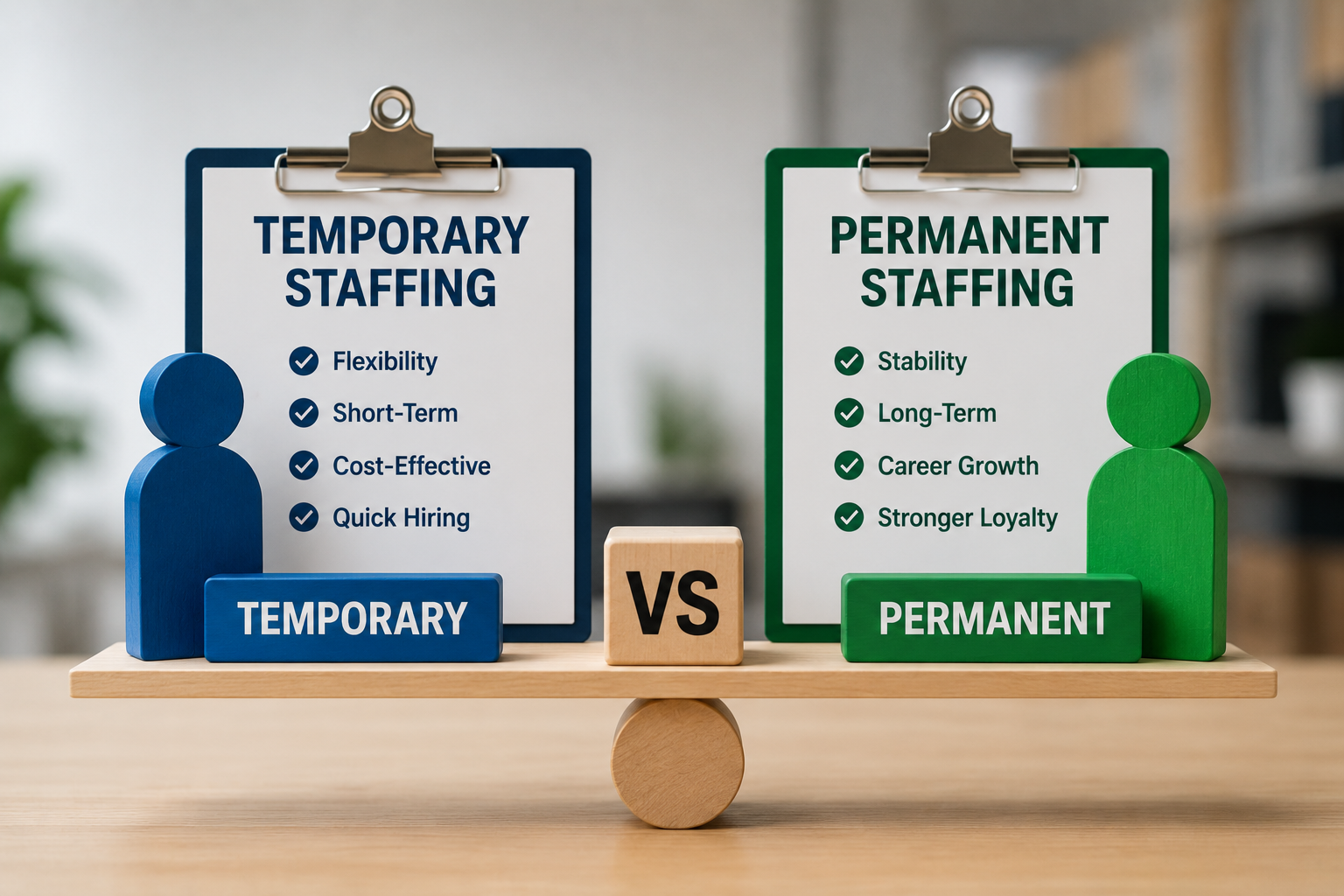
- Temporary and permanent staffing solutions
- Better candidate matching
Partnering with experienced recruiters allows businesses to focus on their core operations while hiring experts manage the recruitment process.
Best Practices for Successful Hiring
Successful recruitment requires continuous improvement.
Businesses should:
- Define clear job requirements
- Improve employer branding
- Communicate with candidates promptly
- Conduct structured interviews
- Use data-driven recruitment strategies
- Invest in employee development
- Review hiring performance regularly
Following these practices leads to better hiring decisions and long-term workforce stability.
Conclusion
Hiring challenges are common, but they don’t have to limit business growth. By understanding the obstacles involved in recruitment and implementing practical solutions, companies can attract qualified professionals, reduce hiring time, improve employee retention, and strengthen their workforce.
Whether you’re recruiting for a single position or building an entire team, a strategic hiring approach ensures better results. Businesses that embrace modern recruitment methods, leverage technology, and partner with experienced staffing agencies are well-positioned to succeed in today’s competitive talent market.
Investing in the right recruitment strategy today will create a stronger, more productive workforce for the future.
Frequently Asked Questions (FAQs)
1. What is the biggest hiring challenge companies face?
Finding qualified candidates with the right skills and experience remains one of the most significant recruitment challenges.
2. How can businesses reduce hiring time?
Businesses can streamline interviews, use Applicant Tracking Systems, communicate quickly with candidates, and partner with staffing agencies.
3. Why do candidates withdraw from recruitment processes?
Candidates often leave due to delayed communication, lengthy hiring procedures, or receiving better offers from other employers.
4. How can companies improve employee retention?
Offering competitive salaries, career development opportunities, positive work culture, and employee recognition helps improve retention.
5. Why should companies work with staffing agencies?
Staffing agencies provide access to qualified candidates, reduce hiring time, improve recruitment quality, and help businesses fill positions efficiently.